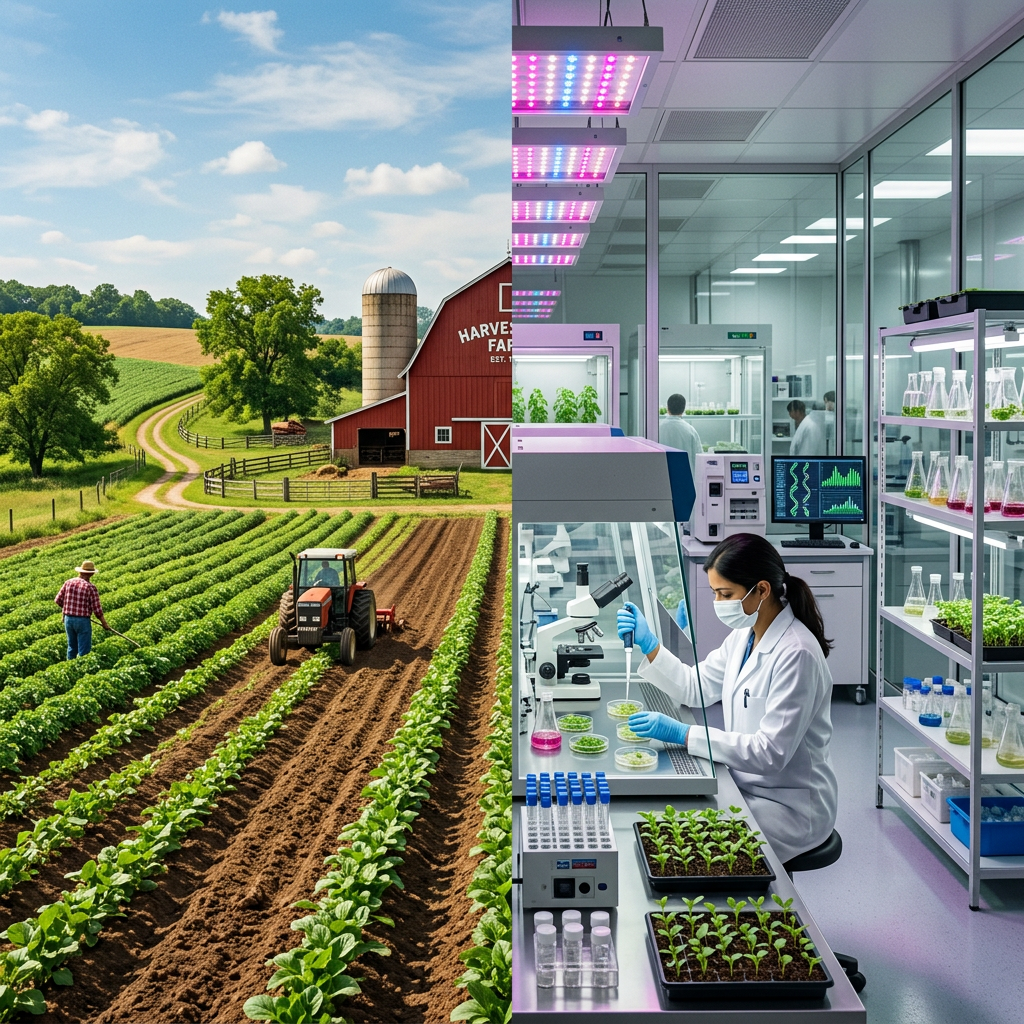
Let’s start Part II of the series…Because apparently your corn has a backstory.
Few food topics create chaos faster than mentioning GMOs at dinner.
Say “genetically modified food” and suddenly someone starts talking about lab experiments, someone else brings up global hunger, and your aunt somehow blames everything on “chemicals.”
Meanwhile, the corn is just sitting there like:
“Can everyone calm down? I’m literally just corn.”
So what are GMOs really? Are they helping save the world—or plotting against your salad?
Let’s break it down.
What Are GMOs?
GMO stands for Genetically Modified Organism.
Which sounds suspiciously like a rejected superhero movie title.
GMOs are organisms—usually crops—whose DNA has been altered through genetic engineering to give them specific traits faster than traditional breeding.
Scientists basically looked at farming and said:
“What if tomatoes lasted longer?”
“What if corn fought bugs?”
“What if crops survived droughts?”
And agriculture said:
“You know what…go off.”
Common GMO crops include:
- Corn
- Soybeans
- Canola
- Sugar beets
These crops are often modified to improve farming efficiency and reduce losses.
Because farmers already deal with enough drama from weather, pests, and markets.
The Pluses of GMOs
Higher Crop Yields
GMOs can help crops resist drought, pests, and disease.
That means farmers can grow more food with fewer losses.
Which is helpful because the global population keeps growing and everyone still expects guacamole at parties.
Reduced Pesticide Use
Some GMO crops, like Bt corn, produce their own pest resistance.
Imagine being a bug and discovering your favorite snack now fights back.
Nature can be rude.
Enhanced Nutrition
Some GMO foods are designed to improve nutrition.
Example: Golden Rice contains additional vitamin A.
Even rice is out here trying to become a multivitamin.
Longer Shelf Life
Some produce stays fresh longer thanks to genetic modifications.
A rare victory against that avocado that goes from rock hard to expired in six minutes.
Environmental Benefits
Certain GMO crops allow farmers to use less aggressive tilling methods.
That can reduce:
- Soil erosion
- Fuel use
- Carbon emissions
Look at crops trying to be environmentally responsible.
The Minuses of GMOs
Potential Allergic Reactions
Some people worry that new proteins introduced into foods could trigger allergies.
Current research shows no greater allergy risk than conventional foods—but scientists continue monitoring.
Because nobody wants surprise reactions from their tortilla chips.
Antibiotic Resistance Concerns
Some GMO development processes have used antibiotic-resistant marker genes.
This has raised concerns among researchers and consumers.
Science: “We’re working on it.”
Internet comment sections: “THIS IS THE END.”
Environmental Risks
Some concerns include:
- Herbicide-resistant weeds
- Cross-pollination with non-GMO crops
- Reduced biodiversity
Apparently weeds are evolving into tiny supervillains.
Ethical and Economic Concerns
Many GMO seeds are patented by large corporations.
Farmers: “Can I reuse seeds?”
Corporations: “That’ll be a no.”
This remains a major point of controversy.
Public Skepticism
Even with regulatory approval, many people remain suspicious of GMOs.
To be fair, “genetically modified organism” sounds way scarier than “corn that survives bugs better.”
Marketing could have helped here.
Who Regulates GMOs?
Spoiler alert: it’s not just scientists in secret underground labs.
In the United States, GMO oversight is shared by:
FDA
Makes sure GMO foods meet food safety standards.
Basically food quality control.
EPA
Regulates GMO plants that produce pest-resistant substances.
They also monitor pesticide residue limits.
USDA
Ensures GMO crops don’t create environmental risks.
They’re basically making sure mutant corn doesn’t take over.
(It won’t.)
GMO Labeling Rules
Since January 2022, foods containing GMOs must be labeled as:
“Bioengineered”
Manufacturers can disclose this through:
- Text labels
- USDA symbols
- QR codes
- Phone numbers
Because apparently your cereal now comes with homework.
Animal products from animals fed GMO feed are exempt from labeling.
Final Thoughts
GMOs can help improve food supply, reduce waste, and support farming efficiency.
They also raise legitimate concerns about environmental impact, corporate control, and consumer transparency.
In short?
GMOs are neither miracle heroes nor evil villains.
They’re just another complicated topic made even messier by internet arguments and people yelling in grocery store aisles.
And honestly, your biggest food problem is probably still that bag of spinach slowly dissolving in your refrigerator.