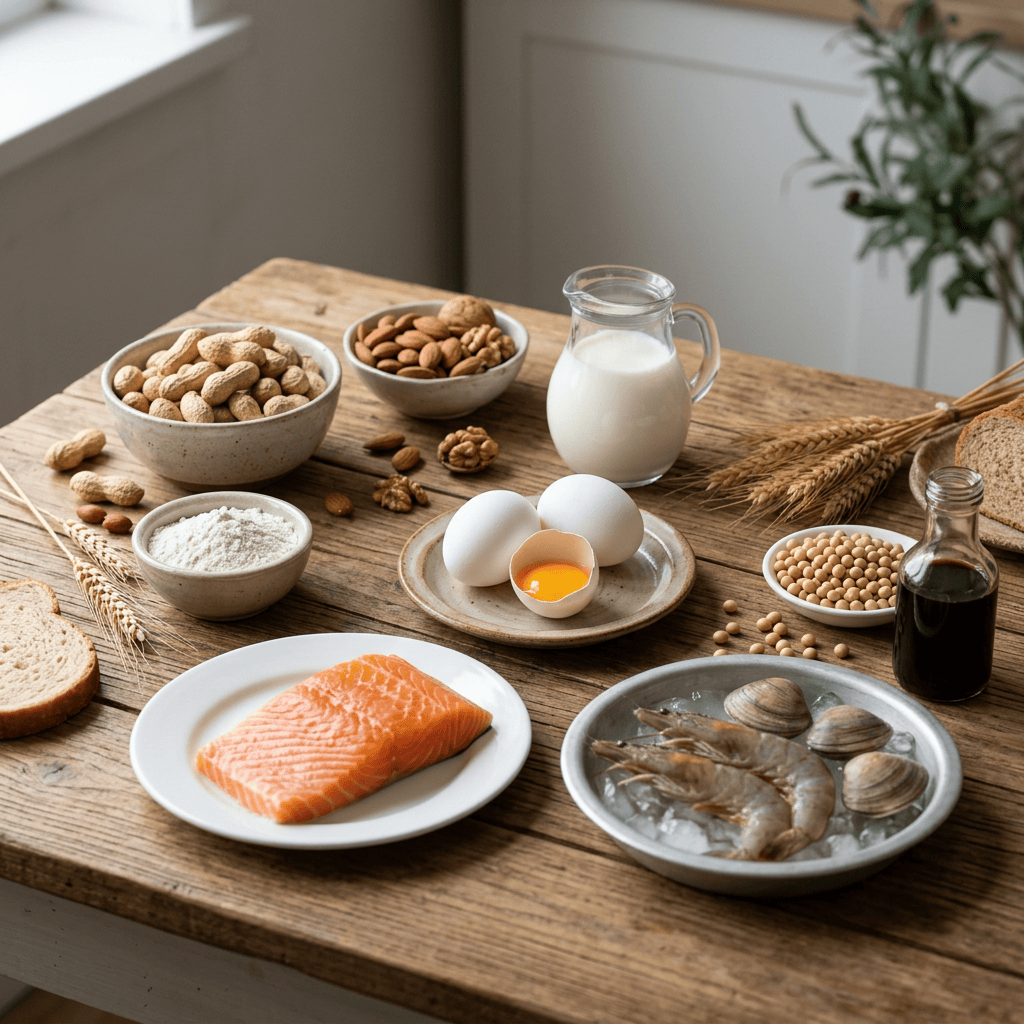
Food allergies sound simple — “Just don’t eat the thing!” — until you realize your immune system has the emotional range of a middle‑school hall monitor who’s been given far too much power and absolutely intends to use it.
Because for some people, one peanut is basically the equivalent of pulling the fire alarm.
Let’s talk about it — with humor, honesty, and zero eye rolls.
The Drama of the Immune System
If you have food allergies, your immune system is not chill. It’s not relaxed. It’s not “go with the flow.”
It’s dramatic.
It sees a harmless food — maybe a cashew — and instead of calmly assessing the situation, it launches into full Shakespearean meltdown:
“A CASHEW? IN MY BODY? TREACHERY!”
Then it flips a metaphorical table and sends your whole system into chaos.
This isn’t a preference. This is biology doing the absolute most.
Why Food Allergies Aren’t “Cute”
People without allergies sometimes say things like:
- “Just have a little bit.”
- “Are you sure you can’t eat it?”
- “It only has trace amounts.”
- “What’s the worst that could happen?”
Well, Karen, the worst is anaphylaxis, which is basically your body rage‑quitting life.
Food allergies are medical. They’re serious. They’re not cured by positive thinking or “just trying it.”
The Social Olympics of Having Food Allergies
1. The Menu Scan
You read every ingredient like you’re decoding ancient hieroglyphics.
2. The Awkward Question
“Hi, does this contain nuts?” The server either:
- confidently says “No,”
- confidently says “Yes,”
- confidently says “I have no idea,”
- or disappears to ask someone who also has no idea.
3. The Backup Snack
You brought something safe. You always do. You’re basically a walking emergency kit.
4. The Apology Tour
You apologize for your allergy even though you didn’t choose it, don’t enjoy it, and would absolutely return it if customer service allowed.
What People Get Wrong About Food Allergies
- Allergies ≠ intolerances. Lactose intolerance is uncomfortable. Peanut allergy is “call 911.”
- You can’t “build tolerance” by eating the food. This is not exposure therapy. This is danger.
- Cross‑contamination matters. A crumb is still a problem. A shared knife is still a problem. A “nut‑free” cookie made in a “nut‑filled” kitchen is… not nut‑free.
- Asking questions isn’t dramatic. It’s responsible. It’s survival.
How to Support Someone With Food Allergies
- Believe them.
- Don’t pressure them.
- Offer help if needed.
- Don’t make them feel like an inconvenience.
Small actions = big safety.
Living With Food Allergies Doesn’t Mean Living in Fear
It means living with awareness. It means reading labels like a detective. It means carrying medication like a superhero. It means advocating for yourself even when it feels awkward.
Your immune system may be dramatic, but you’re prepared — and that’s what matters.
Yes, You Can Grow Into Food Allergies (Because Bodies Love Plot Twists)
Here’s something people don’t always realize: You can go your whole life eating a food with zero issues… and then one day your immune system suddenly decides that food is the enemy. It is common and it has happened too me.
It’s like your body wakes up and chooses chaos.
There are a few reasons this can happen:
- Immune system changes over time Your immune system isn’t a static machine — it evolves. Sometimes it becomes more reactive as you age, especially after illness, hormonal shifts, or major stress.
- Genetics + environment team up You might have a genetic tendency toward allergies, and then one environmental trigger (infection, exposure, inflammation) flips the switch.
- Gut health plays a role Changes in your gut microbiome can affect how your body responds to certain foods. A disrupted gut can make your immune system misinterpret harmless proteins as threats.
- Repeated exposure can backfire Occasionally, the more often you eat a food, the more likely your immune system is to notice it — and not in a friendly way.
And when that switch flips? Your immune system goes from “Oh hey, almonds!” to “ALMONDS ARE A WEAPON OF MASS DESTRUCTION.”
The Emotional Whiplash Is Real
Growing into a food allergy feels like betrayal.
You’re not just losing a food — you’re losing:
- your favorite snack
- your go‑to recipe
- your carefree restaurant ordering
- your trust in your own body
It’s confusing, frustrating, and sometimes scary. And it’s absolutely valid to grieve the loss of a food you once loved.
The Good News
Even if you develop a food allergy later in life:
- You can still live fully and safely.
- You can still enjoy food — just differently.
- You can still advocate for yourself without feeling dramatic.
Your body isn’t broken. It’s just… dramatic. And now it has new boundaries.
Final Thought
Food allergies deserve respect, not eye rolls, gaslighting or poorly executed dad jokes (or in my case the same one over and over again). They’re real, serious, and manageable — and humor in the right way helps us talk about them without minimizing their impact.