It’s another Wellness Wednesday and the start of another 3 part series….
Because apparently even vegetables have drama now.
Walk into any grocery store and you’ll quickly realize food labels are doing the absolute most.
Organic. Non-GMO. Natural. Farm Fresh. Gluten-Free. Cage-Free. Free-Range.
At this point, we’re just waiting for labels like “emotionally supportive kale.”
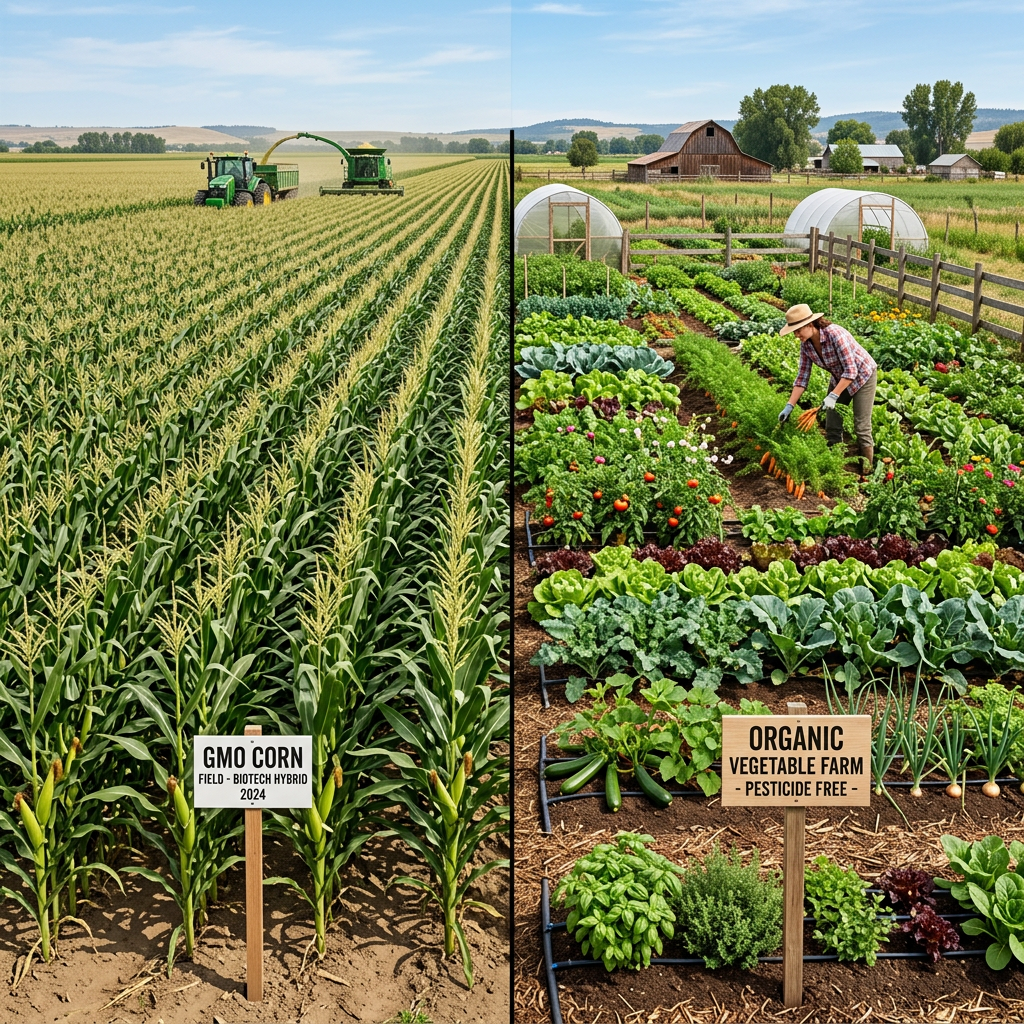
Two labels that spark major debate are GMO and Organic. Some people treat GMOs like they’re science experiments gone wrong, while others look at organic prices and wonder if those apples were hand-delivered by monks.
So what’s the real difference? And which option is better for you?
Let’s dig in.
What Are GMOs?
GMO stands for Genetically Modified Organism, which sounds way scarier than it actually is.
GMOs are plants, animals, or microorganisms whose DNA has been altered using genetic engineering to create specific traits faster than traditional breeding methods.
Think of scientists saying:
“What if this corn could survive pests, drought, and still thrive?”
And the corn responding:
“I was born ready.”
Common GMO crops include:
- Corn
- Soybeans
- Canola
- Sugar beets
These crops are often created to:
- Resist pests
- Handle drought conditions
- Improve crop yields
- Last longer on store shelves
Basically, GMO crops are the overachievers of the food world.
What Does Organic Mean?
Organic food is the grocery store version of someone who says:
“I prefer things natural.”
Organic products are grown without:
- Synthetic pesticides
- Synthetic fertilizers
- GMOs
- Irradiation
Organic farming focuses on:
- Soil health
- Biodiversity
- Animal welfare
To earn the USDA Organic Seal, farms must meet strict federal requirements.
That label basically says:
“This carrot passed an inspection.”
Pros of GMOs
Higher Yields
GMOs help produce more food on less land.
Good news since humans keep making more humans.
Reduced Pest Damage
Some GMO crops naturally resist insects.
Imagine being a bug and your favorite plant suddenly fights back.
Awkward.
Enhanced Nutrition
Certain GMO crops are designed with extra nutrients.
For example, Golden Rice contains added vitamin A.
Even your rice is trying to improve itself.
Lower Food Costs
Increased efficiency often helps lower food prices.
And honestly, we appreciate anything helping our grocery bill right now.
Cons of GMOs
Environmental Concerns
Herbicide-resistant weeds can become a problem.
Apparently even weeds are evolving now.
Corporate Control
Many GMO seeds are patented by large corporations.
Farmers: “Can I save seeds?”
Corporations: “Absolutely not.”
Public Skepticism
Some consumers remain cautious about long-term health concerns.
To be fair, “genetically modified” does sound a little dramatic.
Pros of Organic Food
Fewer Synthetic Chemicals
Many people prefer reducing exposure to synthetic pesticides.
Fair enough.
Environmental Benefits
Organic farming often supports healthier soil and biodiversity.
The planet appreciates the effort.
No GMOs
Organic certification prohibits GMO ingredients.
Your strawberries can remain beautifully traditional.
Cons of Organic Food
Higher Prices
Organic food often costs more.
Sometimes organic grapes seem priced like luxury handbags.
Shorter Shelf Life
Without preservatives, organic foods may spoil faster.
Your organic avocado gives you roughly 11 minutes before turning brown.
Lower Yields
Organic farming typically produces less food per acre.
Nature doesn’t always move at factory speed.
How Are They Regulated?
GMO Regulation
In the United States, GMOs are regulated by:
- FDA
- EPA
- USDA
Foods containing GMOs are now labeled as “bioengineered.”
Which sounds slightly robotic.
Organic Regulation
The USDA National Organic Program enforces organic standards through inspections and certifications.
Yes, your lettuce has paperwork.
Which Should You Choose?
There’s no universal answer.
Choose GMO if you prioritize:
- Affordability
- Innovation
- Food availability
Choose Organic if you prioritize:
- Natural farming practices
- Lower synthetic chemical use
- Environmental concerns
Or do what most people do:
Buy what fits your budget and try not to overthink the tomato aisle.
Final Thoughts
Both GMO and organic foods have benefits and drawbacks.
The real villain?
That bag of spinach you bought with good intentions that turns into green slime in your fridge.
Choose what works best for your lifestyle, budget, and values—and don’t let grocery store marketing make your shopping trip more stressful than it needs to be.
 Whatnot Healthy Lifestyle & Coaching