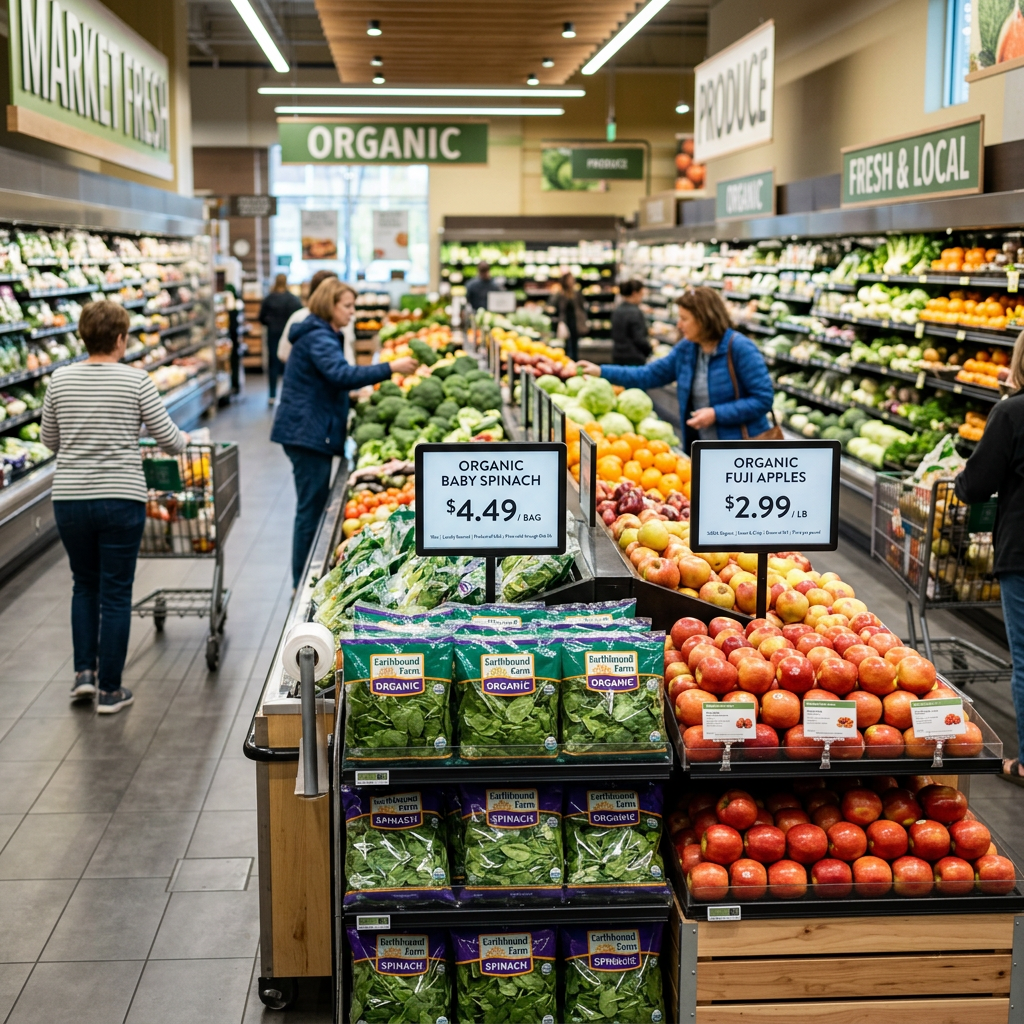
Final week of our series is here!
Or are we all just paying extra for emotionally superior lettuce?
Walk through any grocery store and you’ll see it everywhere:
Organic strawberries
Organic eggs
Organic cereal
Organic snacks
Organic water (okay hopefully not, but give marketers time)
And somehow everything labeled organic costs just enough to make you whisper:
“Why are these blueberries charging luxury rent?”
So what does organic actually mean?
Is it truly healthier? Is it heavily regulated? Or is it just regular food wearing a fancy label and judging your frozen pizza?
Let’s investigate.
What Does “Organic” Actually Mean?
First things first:
Organic does not automatically mean:
- Healthier
- More nutritious
- Magical
- Blessed by farmers under a full moon
It simply refers to how food is grown, processed, and handled.
Organic farming typically avoids:
- Synthetic pesticides
- Synthetic fertilizers
- GMOs
- Sewage sludge
- Irradiation
Because apparently “grown without sewage sludge” needed to be officially clarified.
Organic farming also focuses on:
- Crop rotation
- Soil health
- Sustainability
- Animal welfare
Basically organic farms are trying to be the overachievers of agriculture.
Is Organic Food Regulated?
Yes.
Very regulated.
Unlike labels like “natural,” which can basically mean whatever marketing departments want it to mean, organic has actual legal standards.
The United States Department of Agriculture oversees organic food through the National Organic Program.
That means companies can’t just slap “organic” on a package because they used a green font and added leaves to the label.
To display the USDA Organic Seal, products must meet strict federal requirements.
Your carrots have paperwork.
How Does Organic Certification Work?
Getting certified isn’t exactly easy.
Farms and businesses must:
- Submit an Organic System Plan
- Undergo annual inspections
- Maintain detailed records
- Prove product traceability
- Complete a three-year transition period if land previously used prohibited substances
Three years.
That’s longer than some celebrity marriages.
Organic Label Categories
Not all organic labels mean the same thing.
100% Organic
Every ingredient is organic.
These foods are fully committed.
Organic
At least 95% of ingredients are organic.
Still pretty impressive.
Made with Organic Ingredients
At least 70% organic ingredients.
This category feels like someone saying:
“I mean…I’m trying my best.”
Why Regulation Matters
Without regulations, grocery stores would be complete chaos.
You’d have products labeled:
- Farm-ish
- Nature-adjacent
- Sort of wholesome
- Emotionally organic
Thankfully, regulations help protect consumers from misleading labels.
The USDA can issue penalties or revoke certification if companies break the rules.
Yes—even lettuce can get audited.
Is Organic Worth It?
That depends on your priorities.
Some people choose organic because they prefer:
- Fewer synthetic pesticides
- Sustainable farming practices
- No GMOs
- Animal welfare standards
Others see the price tag on organic grapes and immediately walk away.
Both reactions are understandable.
Final Thoughts
Organic food isn’t just a trendy buzzword—it’s a legally regulated label with strict standards.
So yes, your organic kale probably did earn that label.
Whether it’s worth paying extra?
That’s between you, your grocery budget, and the strawberries currently priced like concert tickets.