Halloween didn’t start with plastic skeletons from Target or pumpkin‑spice‑everything. Its origins go back over 2,000 years to the ancient Celtic festival of Samhain, which was basically the original “the veil is thin” gathering. Picture bonfires, spooky vibes, and people wearing animal skins because Spirit Halloween wasn’t invented yet.
The Celts believed that on October 31, the boundary between the living and the dead blurred. Ghosts could wander around, spirits could drop by uninvited, and everyone collectively agreed this was a great time to light fires and put on disguises. Honestly, same.
Enter the Romans
When the Romans conquered Celtic lands, they blended Samhain with two of their own celebrations—one honoring the dead and one honoring Pomona, the goddess of fruit. This is likely why bobbing for apples became a thing. Yes, the flirtatious party game where you dunk your entire face in a bucket of water like a golden retriever. History is wild.
Medieval Times: When Halloween Got Extra
Fast‑forward to the Middle Ages, when the church introduced All Saints’ Day and All Souls’ Day. People began dressing up as saints, angels, and demons—the original cosplay community.
They also went “souling,” which was basically trick‑or‑treating but with prayers instead of candy. Children would knock on doors offering to pray for your dead relatives in exchange for food. Imagine a kid today saying, “I’ll pray for your Aunt Linda if you give me a Kit Kat.” Different times.
Pumpkins, But Make Them Spooky
Jack‑o’-lanterns started as carved turnips in Ireland. If you’ve never seen a carved turnip, they look like vegetables possessed by demons who haven’t slept in 400 years. When Irish immigrants came to America, they found pumpkins and said, “Oh thank goodness, something that doesn’t look like a haunted root vegetable,” and the pumpkin‑carving tradition was born.
America Turns Halloween Into a Candy Olympics
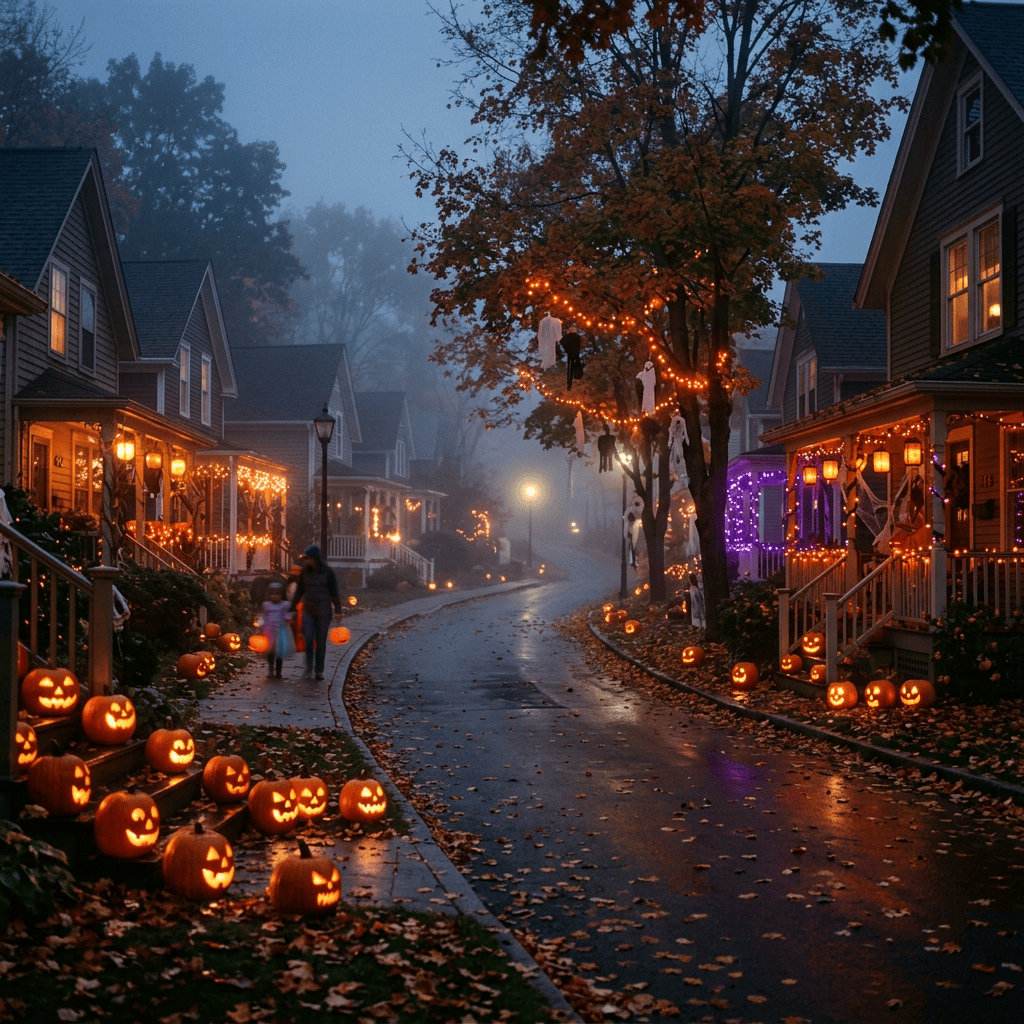
By the 20th century, Halloween had transformed into the holiday we know today: kids in costumes, neighborhoods full of decorations, adults pretending they bought the candy “for trick‑or‑treaters,” and at least one person who takes their haunted house way too seriously.
Trick‑or‑treating became mainstream in the 1950s, and candy companies have been thriving ever since. If you’ve ever eaten a “fun size” candy bar and wondered what’s fun about it, the answer is nothing. It’s a scam. But we accept it because it’s Halloween.
Why We Still Love Halloween
Halloween is the one day a year when adults can wear costumes without judgment, kids can collect candy like tiny sugar‑powered pirates, and introverts can put out a bowl that says “Please take one” and hope for the best.
It’s ancient, weird, magical, and slightly unhinged—which is probably why it’s still thriving. It’s a holiday that lets us be spooky, silly, nostalgic, and creative all at once.
Whether you’re a costume minimalist, a full‑send decorator, or someone who just wants the discounted candy on November 1, you’re participating in a tradition thousands of years old… that somehow led to inflatable lawn skeletons and dog costumes shaped like tacos.
Happy Halloween.