What are you actually hungry for? Food cravings are a common experience, but they can be more than just a fleeting desire for a specific taste. Cravings can reveal underlying emotional, psychological, and physiological needs. Understanding what your cravings are really trying to tell you can help you respond to them mindfully and make healthier choices.
Let’s start this week by examining the common cravings.
Sweet Cravings:
Sweet cravings are often associated with a need for quick energy. They can indicate low blood sugar levels or a desire for comfort and reward. Emotional stress, fatigue, and hormonal changes can also trigger sweet cravings.
Salty Cravings:
Salty cravings can be a sign of dehydration or an electrolyte imbalance. They may also indicate stress or a need for comfort. Salty foods can provide a sense of satisfaction and help alleviate feelings of anxiety
Fatty Cravings:
Fatty cravings can signal a need for essential fatty acids, which are important for brain function and overall health. They may also be a response to stress or a need for comfort. Fatty foods can provide a sense of fullness and satisfaction.
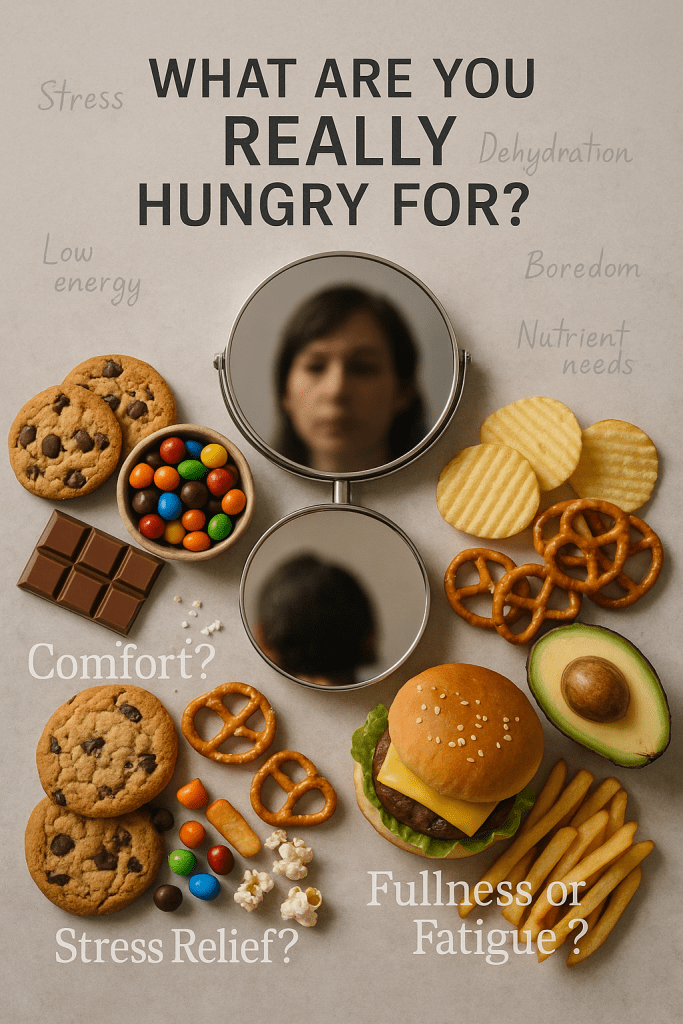
Now that we have a better understanding of what each type of craving is, let’s take a look at how to examine what you really need to combat those cravings-
Emotional Needs:
Cravings can be a way of coping with emotional stress, anxiety, or sadness. They may provide temporary relief or comfort, but it’s important to address the underlying emotional needs in a healthy way.
Nutritional Deficiencies:
Cravings can indicate a lack of certain nutrients in your diet. For example, a craving for chocolate may signal a need for magnesium, while a craving for red meat may indicate a need for iron.
Hormonal Changes:
Hormonal fluctuations, such as those that occur during menstruation or pregnancy, can trigger cravings. Understanding these changes can help you manage your cravings more effectively.
To help with these issues, here are some tips-
Stay Hydrated-Sometimes cravings can be a sign of dehydration. Drinking water regularly can help reduce the intensity of cravings.
Eat Balanced Meals-Ensure your meals include a balance of carbohydrates, proteins, and fats. This can help stabilize blood sugar levels and reduce cravings.
Address Emotional Needs- Find healthy ways to cope with stress and emotions, such as practicing mindfulness, engaging in physical activity, or talking to a friend.
Choose Healthy Alternatives-When cravings strike, opt for healthier alternatives. For example, choose fruit instead of candy, or nuts instead of chips.
Practice Mindful Eating-Pay attention to your body’s hunger and fullness cues. Eat slowly and savor each bite to help reduce overeating and mindless snacking.
Cravings are more than just a desire for a certain flavor—they’re signals from your body and mind trying to communicate deeper needs. Whether it’s a sweet tooth hinting at emotional comfort, a salty urge pointing to stress or dehydration, or a fatty craving signaling a nutritional gap, each one offers insight into your overall well-being. By tuning in and asking yourself what you’re really hungry for, you can begin to respond with intention rather than impulse.
This week, take a moment to pause when a craving hits. Reflect on what might be driving it—emotions, stress, fatigue, or a nutritional need—and choose a response that truly nourishes you. With mindfulness and curiosity, cravings can become a powerful tool for self-awareness and healthier living.
 Whatnot Healthy Lifestyle & Coaching