This week is our final week of our 3-part miniseries on eggs. I wanted to take a look at the various types of eggs.

Chicken Egg Types (by Farming Method)
- Conventional Eggs
- From hens raised in cages.
- Most affordable and widely available.
- Limited movement for hens.
- Cage-Free Eggs
- Hens roam indoors in barns.
- More humane than caged systems.
- Free-Range Eggs
- Hens have some outdoor access.
- Often considered better for animal welfare.
- Pasture-Raised Eggs
- Hens roam freely on pasture.
- Richer flavor and deeper yolk color.
- Organic Eggs
- From hens fed organic feed.
- No synthetic pesticides or GMOs.
- Certified Organic Eggs
- Meet USDA organic standards.
- Hens are cage-free or free-range with organic feed.
- Pasteurized Eggs
- Gently heated to kill bacteria.
- Safe for raw consumption (e.g., in dressings or mousse).
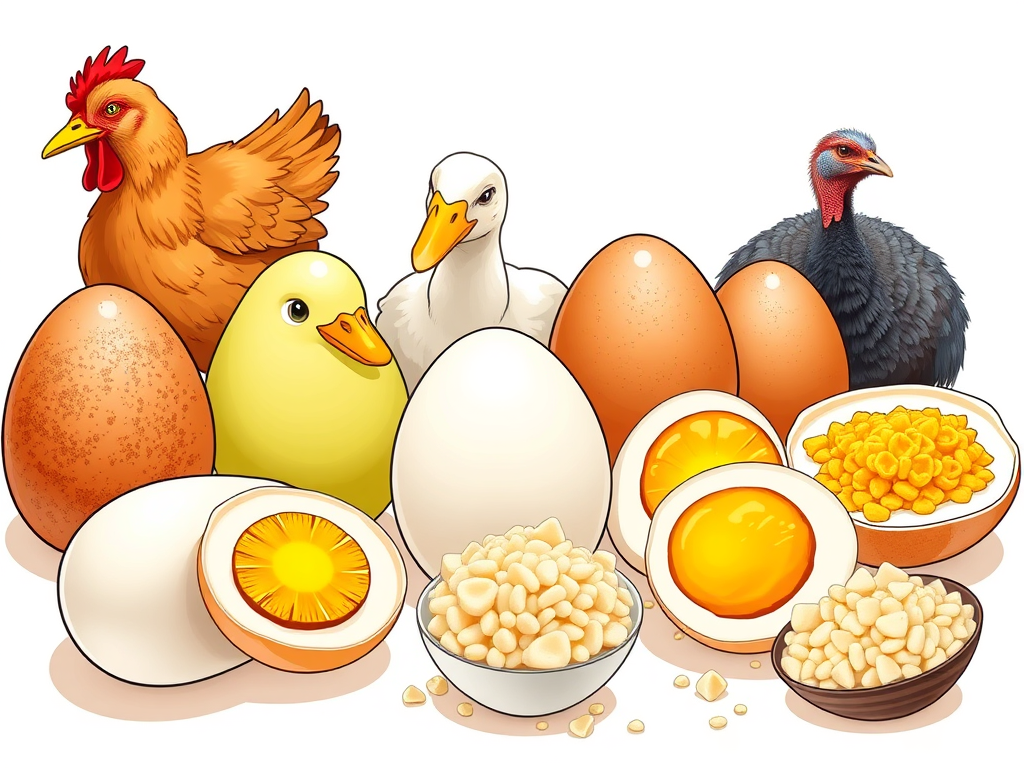
Egg Types by Animal Source
- Chicken Eggs (see above)
- Most common; versatile and mild in flavor.
- Duck Eggs
- Larger, richer, and creamier.
- Great for baking and custards.
- Quail Eggs
- Small and speckled.
- Delicate flavor, often used in gourmet dishes.
- Goose Eggs
- It is very large with a strong flavor.
- Seasonal and less common.
- Ostrich Eggs
- Huge—equivalent to 20–24 chicken eggs.
- Thick shell; novelty or specialty item.
- Turkey Eggs
- Rare due to low production.
- Rich and creamy.
- Emu Eggs
- Dark green and large.
- Rich flavor, often used in specialty cooking.
- Caviar (Fish Eggs)
- From sturgeon and other fish.
- Salty, luxurious delicacy
 Whatnot Healthy Lifestyle & Coaching