Wahoo! It’s a new week, and last week we focused on Spice Tolerance. This week let’s keep it spicy again and look at the update research on chili peppers and capsaicin.
To begin, earlier this year the University of Mosul, found that chili peppers, especially red, have great health benefits such as, helping with:
- Abnormal blood clotting
- Oxidative stress
- Obesity and diabetes
- Inflammation
- Cancer
- Microbial infections
- Viral diseases (including COVID-19)
Another study this year takes a look at why some peppers feel less spicy. It was published in the Journal of Agricultural and Food Chemistry, discovered that the following compounds are the reason why some of the peppers taste milder than their Scoville Heat Unit-
- Capsianoside I
- Roseoside
- Gingerglycolipid A
These compounds interact with the TRPV1 receptor, which is responsible for the burning sensation caused by capsaicin
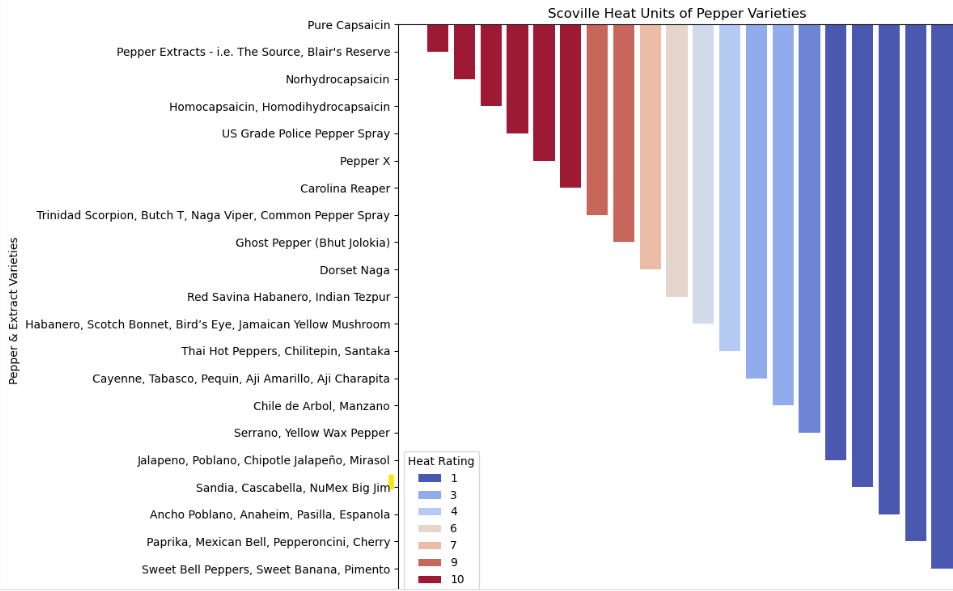
This study can have some serious implications; these compounds could be used to moderate heat in spicy foods without altering flavor in the food industry. Breeders might develop milder or more intense peppers by adjusting levels of these compounds (Pepper X is currently the hottest). And finally, it may result in the Scoville being redone; as these findings challenge the reliability of the Scoville Heat Unit (SHU) system, which only considers capsaicinoid concentration.
And I am sure there are more studies to come as new information always comes around.
 Whatnot Healthy Lifestyle & Coaching